


Los Amantes de Teruel: Loving a Legend to Death
A love story that has become a global festival. Las Bodas de Isabel now tests the limits of celebration and responsible travel.
TERUEL
2/28/2026
A City in Identity Crisis and a Love Story to Match
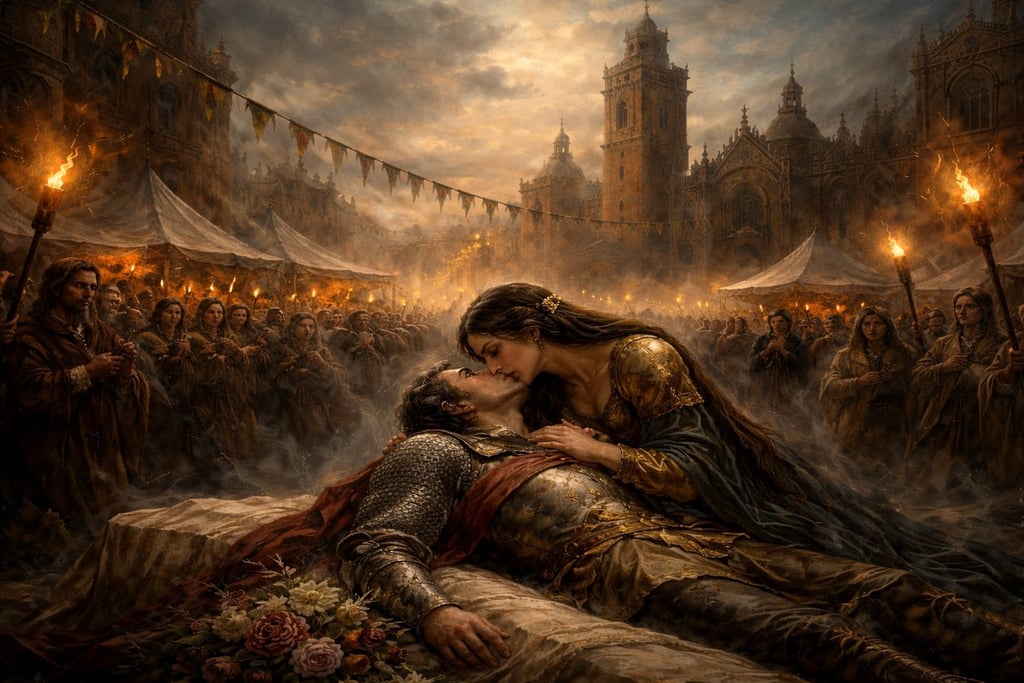
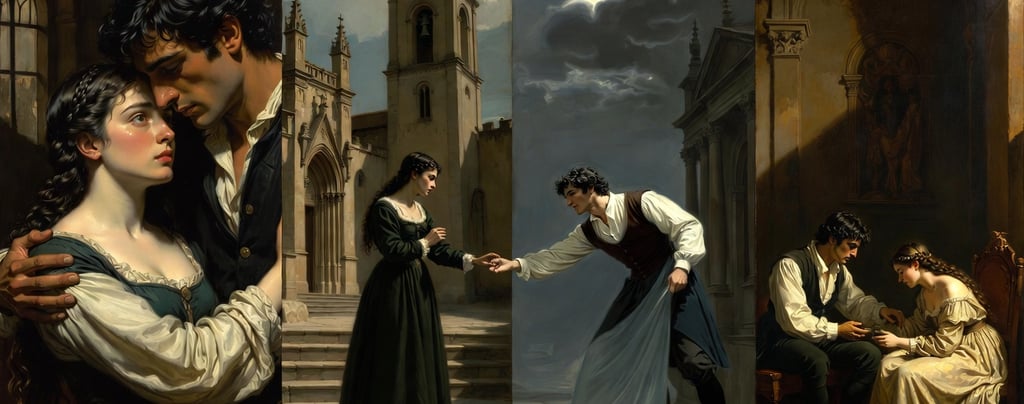
Diego de Marcilla and Isabel de Segura grew up as childhood friends, which turned into love, deep in the heart of Teruel. Unfortunately, Diego didn’t have the funds to impress her father, so he left to seek his fortune, vowing to return within five years and make Isabel his wife. She waited hopelessly, and five years passed. Believing she would never see him again, she married someone wealthier, because although love is great, it doesn’t pay the bills.
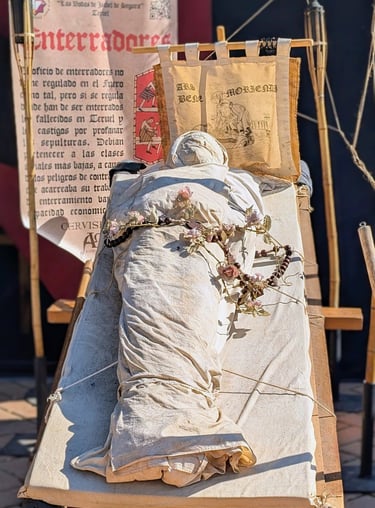
Just like in a modern-day telenovella, Diego returned the next day and begged Isabel for one last kiss, and to his surprise, she refused. It wasn’t because she didn’t love him, but she was married now, and honour in 13th-century Aragón was not something you could sacrifice for sentiment. And then, Diego died at her feet from the heartbreak. At his funeral, Isabel finally gave him that kiss and immediately collapsed beside him from the grief.
For centuries, the story of Isabel and her doomed lover survived as an oral tradition, passed from one generation to the next. In some versions, the lovestruck man was named Diego, but others referred to him as Juan. It just depended on who was telling it.
Then, in 1555, two mummified bodies were reportedly found in the Church of San Pedro in Teruel. Fortunately for the story, when preserved corpses appear in a church already associated with a tragic love story, the narrative does the rest of the work. By 1560, they were identified as Diego de Marcilla and Isabel de Segura, and whether the identification was accurate or simply compelling remains uncertain.
What was certain was that the Amantes de Teruel had a grave, and a grave, as it turns out, is enormously useful to a legend.
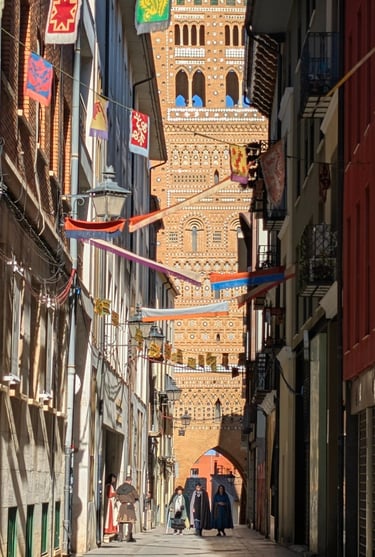
In 1217, Teruel found itself going through an identity crisis. Only recently having been taken under Christian control, Teruel was building upward and outward, constructing Mudéjar towers with Muslim craftsmanship under Catholic supervision, and the Jews worked to keep trade alive. It was a place of power struggles, overlapping cultures, and everyone insisting they were in charge. In the midst of all that careful nation-building and moral certainty was a young couple caught in a bad Catholic romance.
From Heartbreak to Hallowed Ground: The Legend Finds Its Bones
By the 16th century, the story was circulating in popular ballads, picked up by playwrights and poets who recognised a good tragedy when they saw one. In 1616, Juan Yagüe de Salas, the city's own notary and archivist, published a 20,000-verse epic poem about the lovers. Cervantes and Lope de Vega wrote sonnets, and across the channel, Shakespeare was writing Romeo and Juliet. No social media. No shared notes. Just the same universal obsession with love, honour, and catastrophic timing playing out simultaneously across Europe in different languages. The irony is that Yagüe wrote the poem first, then found the documented evidence three years later.
When Juan Eugenio Hartzenbusch, a playwright and poet, wrote Los Amantes de Teruel in 1837, he established Diego de Marcilla as the protagonist of the story. From that point on, the legend was bound in print, on stage, and eventually in festival reenactments.
The Woman Who Struck the Spark
For centuries, the story survived, passed down through the generations. Then, Raquel Esteban arrived with a dream.
Raquel Esteban, a Fine Arts and Drama graduate, returned to her hometown of Teruel and found a beautiful city missing its chispa. Her solution was to add a little drama to it. After reading about medieval wedding celebrations in El Cid, she fell asleep and dreamt it into existence: the name, Las Bodas de Isabel de Segura, the costumes, and the processions. One woman, one dream, and one festival born from the imagination of someone who refused to let her village fade into the background. What she could never have imagined was the price of seeing that dream come true.
In February 1997, the streets hosted a handful of actors in medieval costume, mingling with locals and reenacting the first Bodas de Isabel. Around 80 groups took part, and nobody could have predicted what would happen next.
By the mid-2000s, the community-led celebration had grown into a coordinated operation, with local groups forming a federation and regional authorities formally joining the process. By 2015, even the regional government had a seat at the table. Crowds tripled. Now, around 100,000 visitors in medieval gear pack Teruel’s streets, and over 150 organized groups run tents and taverns across the city under a federation that didn’t even exist two decades ago. The Federation brought structure, but in doing so, crowds and logistics started competing with the festival’s original intimacy.
When the Story Becomes a Crowd
In December 2025, Las Bodas de Isabel de Segura was granted International Tourist Interest status, a formal recognition of how far it has come. One woman started it. A city sustained it. Today, the streets are fuller, the tents more numerous, and the festival is no longer just a local celebration; it now belongs to everyone, and what once belonged only to Teruel gets lost in the masses.
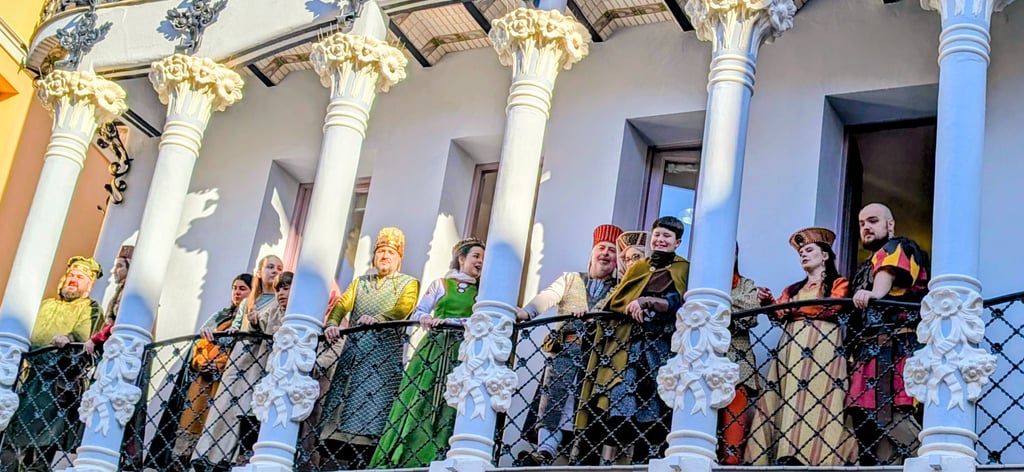
Teruel’s medieval streets weren’t built for a hundred thousand visitors. Raquel Esteban dreamed of an intimate, immersive festival where the legend came alive. By Saturday afternoon, the cobblestones between la Plaza del Torico and the Church are a river of bodies, carrying you downstream with the current. Every restaurant and bar is packed beyond capacity, leaving most to survive on greasy street food at premium prices, a bitter irony in a town celebrated for its rich Aragonese gastronomy. Now, the magnitude of the event threatens to swallow the story she set out to celebrate.
Being Part of the Problem
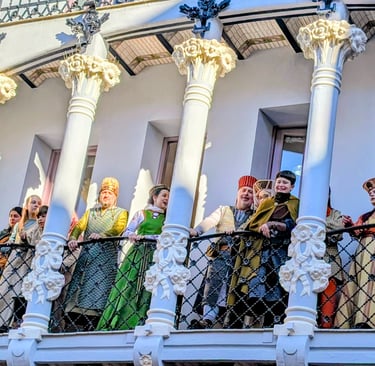
As a participant, I am happy to throw myself into the madness. But it’s impossible to ignore the dichotomy of being part of the experience and at the same time, being part of the problem. The story of Diego and Isabel has survived eight centuries. The question is whether it can survive a hundred thousand of us in one weekend. Festivals like this survive because people care. They thrive when visitors treat the experience as a collaboration, not a conquest.
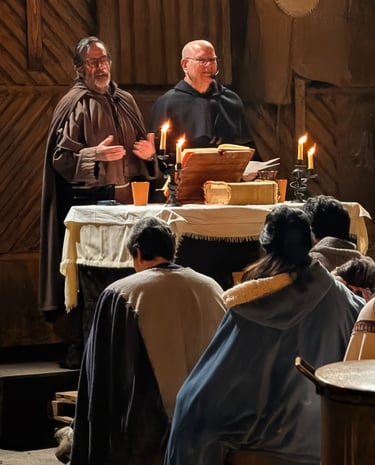
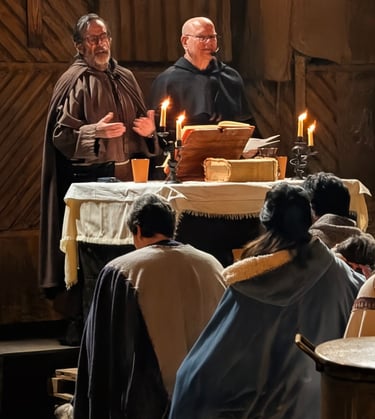
So here’s the uncomfortable question: at what point does sharing culture become selling it? When 100,000 outsiders arrive, control of the narrative inevitably starts losing its meaning. The story is still performed, the costumes still sewn, and the vows still recited, but the focus shifts from living the story to managing the crowd around it.
And then there is the practical reality. When the money rolls in, does it strengthen local life or accelerate the slow erosion of what made the place worth visiting in the first place? Although we didn’t see the balance sheets, we experienced the prices. Teruel’s culture is still alive; you can feel it in the streets, yet the festival stands on a narrow line between authenticity and commodification. It is starting to lean in a direction that rewards scale more than story.
Step off the main strip and into a jayma, the local groups running tents along the side streets. Chat with the families and volunteers inside and listen to their stories and the traditions they're keeping alive, which are now performed for you and 100,000 other people. Pay attention to where your money goes and participate as if you plan to come back.
The crowd doesn't need another photographer.
It needs people who care.
The story deserves to outlast us.
© 2025. All rights reserved.
AI Disclosure: This site uses AI-generated placeholders and AI-assisted editorial tools.
View our Transparency Policy