


Bells, Slings, and Silk: Colmenar Viejo’s La Vaquilla
La Vaquilla is a winter ritual rooted in medieval cattle migrations, where named herds run through the streets, bells clanging, and the year officially dies at gunshot. It finishes the only way it can, with rosquillas, limonada, symbolising the blood of a wooden cow.
MADRID
2/6/2026
La Vaquilla: Til the Cows Come Home
While the rest of Spain mourns the end of winter vacations, Colmenar Viejo is in the process of staging its own “death of the year” ritual. At the end of each January, silk scarves (pañuelos) are collected, cattle horns are polished, and the art of snapping las hondas (leather slings) is perfected. At the heart of it all is La Vaquilla, a festival that appears to have originated from medieval hallucinations, celebrating the historic cattle migrations of the region. At this festival, the "cows" are represented by wooden frames wrapped in ribbons, silk shawls, and trinkets. Only the horns are real.
These are the colourful remnants of the town’s pastoral past, brought to life by a vaquillero who dances beneath the armazón, the wooden frame, who marches through the crowds and animates the wooden cow. With these ornate spirits leading the way, the streets erupt with the clamouring of cowbells and the cracking of leather slings as 25 vaquillas tear through the village, turning every street into a bovine theater.
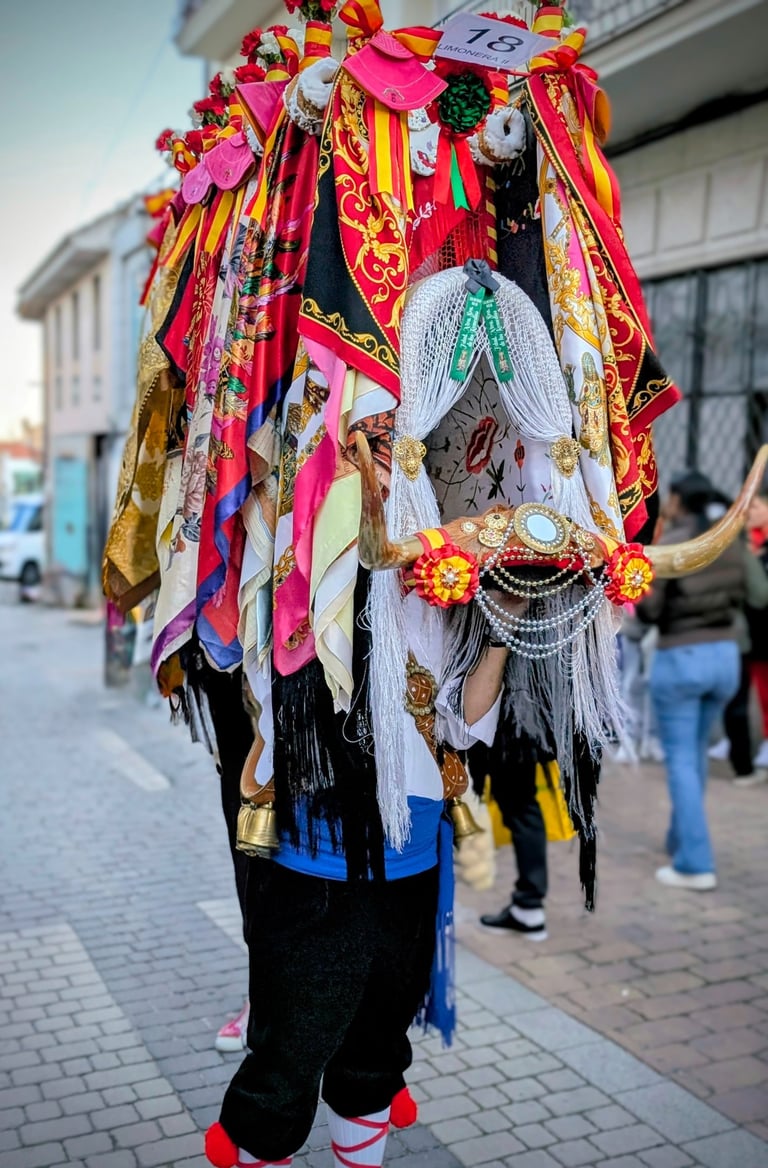
The naming of these 25 distinct groups gives this structure personality and is taken from the shepherd’s habit of naming cows by their temperament rather than using a numbering system. This year’s roster features names like La Descará (The Brazen), the first all-female vaquilla, alongside La Revoltosa (The Troublemaker), and La Zalamera (The Charmer).
The Hierarchy of the Herd
La Vaquilla might look like pure pandemonium to someone watching from the outside, surrounded by silks and the sounds of leather slings, but there's a method to the madness. Every participant follows an inherited chain of command based on traditional cattle-driving crews. At the center stands the Mayoral.
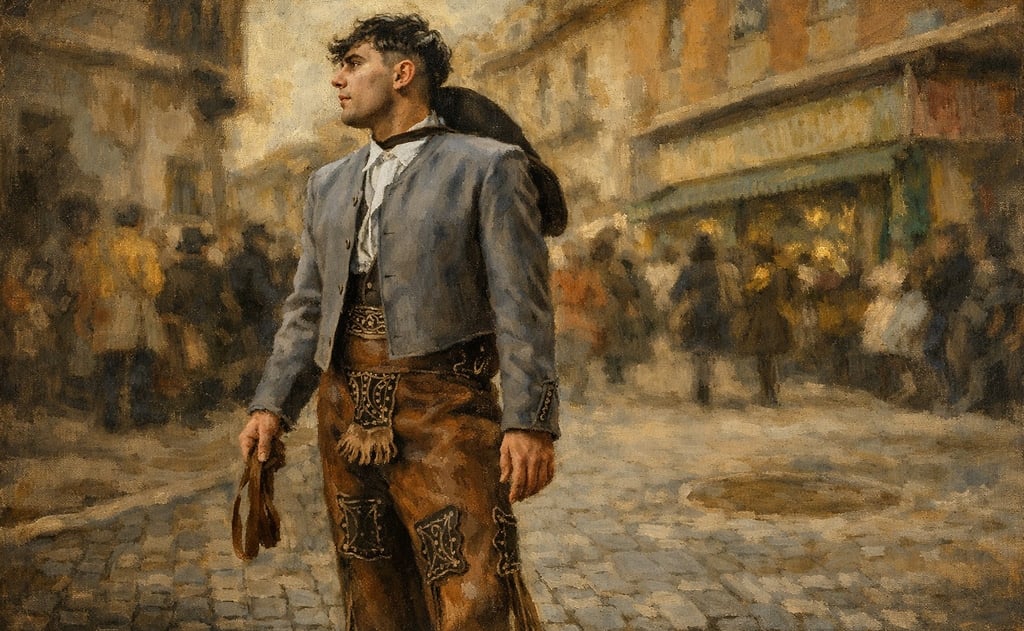
The Mayoral wears a traditional short-jacketed (traje de corto) suit, with a coat thrown over the left shoulder. Although they may resemble a torero, their role is not the same. They are the one commanding the group and carrying a honda (leather sling) not as a weapon but asa symbol of power. The Mayoral serves to direct the steps of the herd, as a shepherd who has mastered this centuries-old ritual.
Following the Mayoral is a regimented unit of up to 20 Vaquilleros, dressed in white shirts, red handkerchiefs, and black corduroy trousers
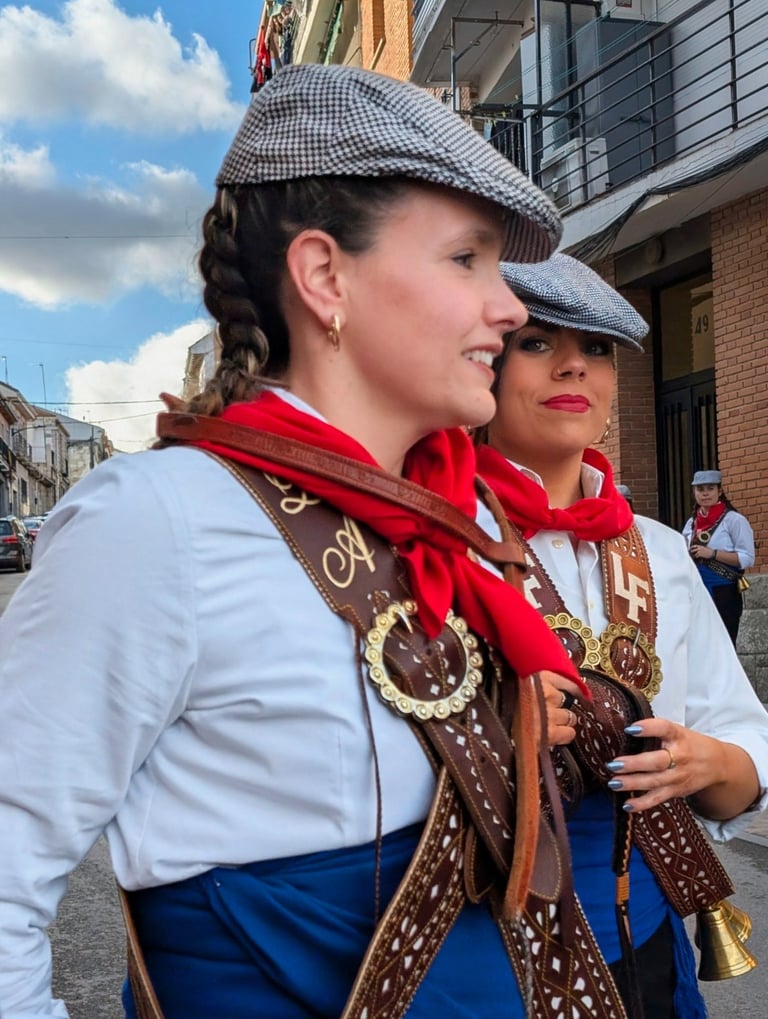
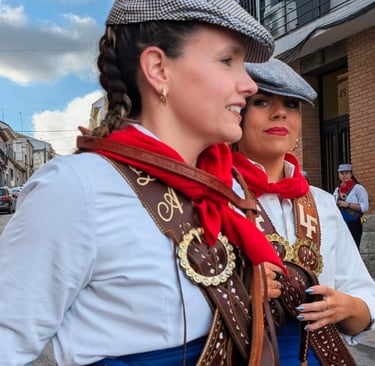
tucked below the knees. They follow in a procession, with embroidered, leather harnesses affixed with large brass bells (campanillas), which create a constant clanging that follows the procession. Every Vaquillero carries a honda, using it to accentuate the Mayoral’s commands with violent, explosive cracks of leather.
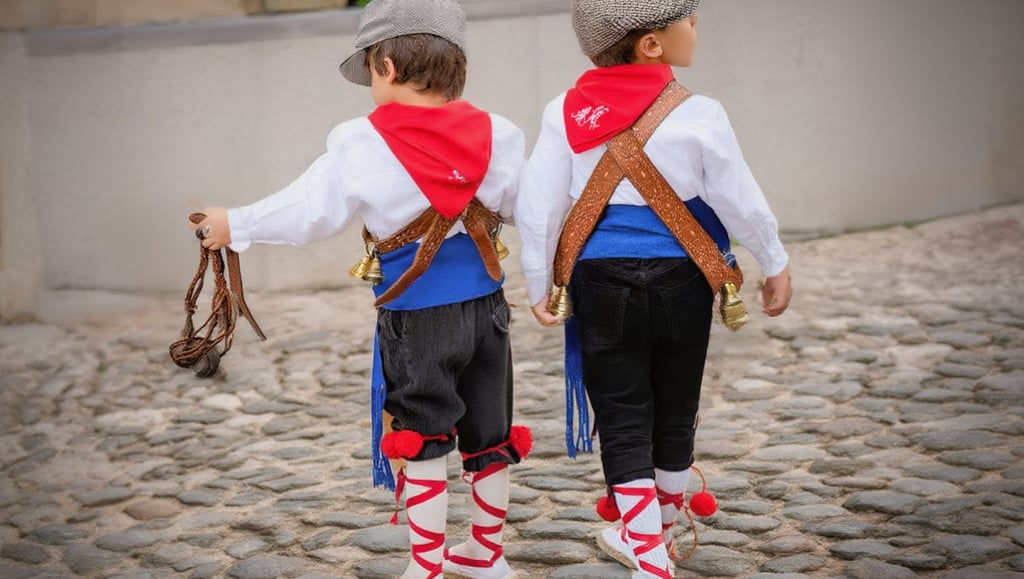
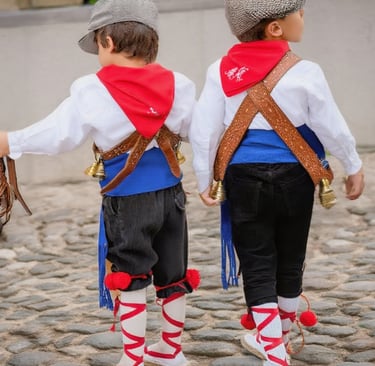
The taleguero, the smallest and youngest member of the group, closes the procession. The taleguero wears an alforja (saddlebag) on their shoulder and is tasked with gathering donations of money or goods in the community. These donations finance the community dinner of limonada and rosquillas, which follow and conclude the ceremony.
Sunset and the Matanza
As the sun sets, the festival reaches its climax with the symbolic matanza. The wooden vaquillas, draped in silk, ribbons, and horns, gather at the Plaza del Pueblo. Three blank rifle shots crack in the air, marking the “death” of the year. The ritual ends in transformation, not destruction, but no one lingers on the symbolism. Once the shots fade, the crowd's attention shifts to the feast of rosquillas (anise donuts) and limonada. a drink symbolising the blood of the sacrificed animal. More than just snacks, this communal meal unites the community until the next winter. While families, friends, and neighbours continue the celebration into the evening, the wooden cows are retired for the year, stored carefully or passed down to the next generation, their names and personalities preserved for next year’s La Vaquilla.
More Than a Hallucination
La Vaquilla is much more than just a festival. It is a symbolic gesture of a tradition that is almost a millennium old, a tradition which continues to honor the shepherding and agricultural way of life that is still held in great respect and practiced in Colmenar Viejo. La Vaquilla isn't a performance staged for promotion, but a ritual fueled by pure participation. As the wooden cows are retired for the year and stored away like family heirlooms, their names and personalities are preserved. In Colmenar Viejo, the year doesn't end with a calendar page, it ends when the last bell tolls and the "blood" of the vaquilla is shared among neighbours, ensuring that even in 2026, the medieval soul of the Sierra still has a place to dance.
Curious to see more of Spain’s fascinating festivals? Hungry Culture explores the stories behind the celebrations, and our playlist of short videos brings La Vaquilla to life. Hear the bells, watch the vaquilleros, and experience the tradition for yourself.
Follow us on social media for daily updates and subscribe to our newsletter to get the latest stories delivered straight to your inbox.
© 2025. All rights reserved.
AI Disclosure: This site uses AI-generated placeholders and AI-assisted editorial tools.
View our Transparency Policy